

Electric vehicles (EVs) are having their moment. Governments love them, automakers are racing to electrify everything, and people are flexing their Teslas like they’re saving the planet single-handedly.
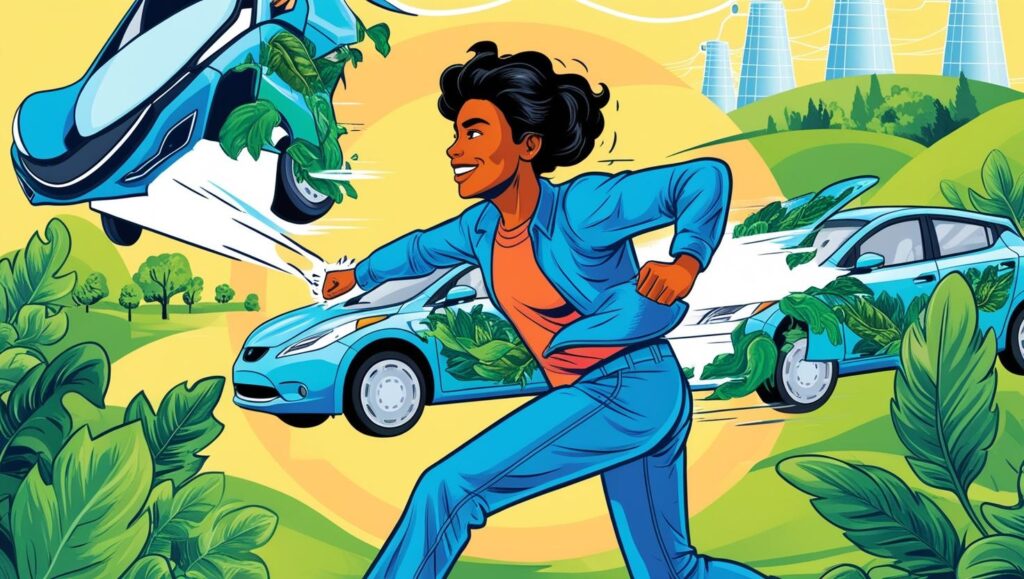
But are EVs truly the chosen ones for solving environmental issues, or are they just a temporary fix—like slapping a Band-Aid on a sinking ship? Let’s break it down.
EVs: The Green Hype Train
1. No Tailpipes, No Problem?
EVs don’t have exhaust pipes belching out CO₂ like their gas-guzzling ancestors, which means cleaner air in cities. If you live in a smog-filled metro, this is a major W. Over their lifetime, EVs emit far fewer greenhouse gases than traditional cars—but (and it’s a big but), their impact depends on where the electricity comes from.
2. EVs Are Basically Energy-Efficient Speed Demons
Gasoline engines waste a ton of energy just making heat. EVs?
They convert 80%+ of their energy into actual movement, compared to the 20-30% efficiency of gas cars. It’s like switching from an old-school lightbulb to LEDs—way less waste, way more efficiency.
3. Goodbye, Oil?
EVs reduce our addiction to oil, which is great because drilling, refining, and transporting oil is a planetary disaster. No more sweating over gas prices or worrying about oil spills—sounds like a win, right? Well, hold on…
The Dark Side of EVs (Because There’s Always One)
1. Battery Mining is the New Oil Drilling
EVs run on lithium-ion batteries, and mining lithium, cobalt, and nickel is not a vibe:
- Lithium mining? Drains water sources like a giant corporate straw.
- Cobalt? Mostly mined in the Congo, often under horrific conditions.
- Toxic waste? You bet.
So, while EVs don’t pump out CO₂ on the roads, their supply chain still has some serious skeletons in the closet.
2. Electricity Ain’t Always Clean, Chief
If your EV is charging from a grid powered by coal, congratulations—you just switched from burning gasoline to burning coal somewhere else. Until the grid runs fully on renewables, EVs are basically playing hide-and-seek with emissions.
3. The Battery Graveyard Problem
Once EV batteries wear out, what do we do with them? Recycling tech is still catching up, and if we don’t figure it out soon, we’re looking at mountains of dead batteries in landfills. Not exactly the green revolution we imagined.
So, Are EVs the Answer or Just a Side Quest?
What if EVs Are Just the Tutorial Level?
EVs are better than gas cars, no doubt. But if we really want a sustainable future, we need to level up:
- Hydrogen fuel cells – Zero emissions, and you don’t need a massive battery.
- Better public transport – What if we didn’t need so many cars in the first place?
- Next-gen batteries – Solid-state batteries could ditch lithium and be way easier to recycle.
Final Verdict: A Step, Not the Destination
EVs are like swapping out plastic straws for paper ones—an improvement, but not a game-changer unless we fix the bigger system. If we don’t clean up battery production, electricity generation, and recycling, we’re just moving the pollution from tailpipes to power plants and landfills.
So yeah, go ahead and buy that EV, but let’s not pretend it’s the endgame. The real win? A transportation system that’s clean, efficient, and doesn’t just shift problems from one place to another.
Now the question is—are we actually building a greener future, or are we just putting emissions in stealth mode?
Disclaimer: Relax, EV fans—this article isn’t here to roast your Tesla (well, maybe just a little). We’re just asking the big questions: Are EVs saving the planet, or are they just pollution in stealth mode? No oil execs sponsored this, no coal plants hacked my laptop—just good old curiosity. If you already drive an EV, congrats! You’re ahead of the game. If you’re still in a gas guzzler, don’t worry—we’re all just trying to survive traffic. Either way, don’t @ me; do your own research and keep questioning the hype!
