

For years, oil drilling has been the villain in our environmental horror story—polluting oceans, fueling climate change, and making gas prices a rollercoaster of pain. But now, with electric vehicles (EVs) and renewable energy on the rise, we’re ditching oil, right? Not so fast.
While EVs don’t run on gasoline, they still need juice, and that juice comes from lithium-ion batteries. The problem? Mining for lithium, cobalt, and nickel—the key ingredients for these batteries—is starting to look a lot like oil drilling 2.0: environmentally destructive, ethically messy, and controlled by a handful of powerful players.
So, are we actually solving the problem, or just swapping one dirty industry for another?
Let’s dig in (pun intended).
Battery Mining: The Good, The Bad, and The Ugly
The Good: EVs Are Still Cleaner Than Gas Cars
Let’s start with some real talk—EVs are still way better for the environment than internal combustion engine (ICE) vehicles. Over their lifetime, EVs produce significantly lower CO₂ emissions compared to gas-powered cars, especially if charged using renewable energy.
But the big fat asterisk here is that the process of making EVs—especially the batteries—has some major downsides.
The Bad: Mining for Batteries is a Dirty Business
1. Lithium Mining: Draining the Planet Like a Giant Capri Sun
Lithium is the backbone of modern EV batteries, but extracting it is a water-guzzling nightmare.
- In Chile, Argentina, and Bolivia (home to 50%+ of the world’s lithium reserves), lithium is extracted by pumping salty groundwater to the surface and letting the water evaporate.
- This process uses up to 500,000 gallons of water per ton of lithium.
- In northern Chile, lithium mining has drastically reduced freshwater availability, making life harder for local farmers and communities.
So, while your EV doesn’t need gasoline, its battery still comes with a massive water footprint.
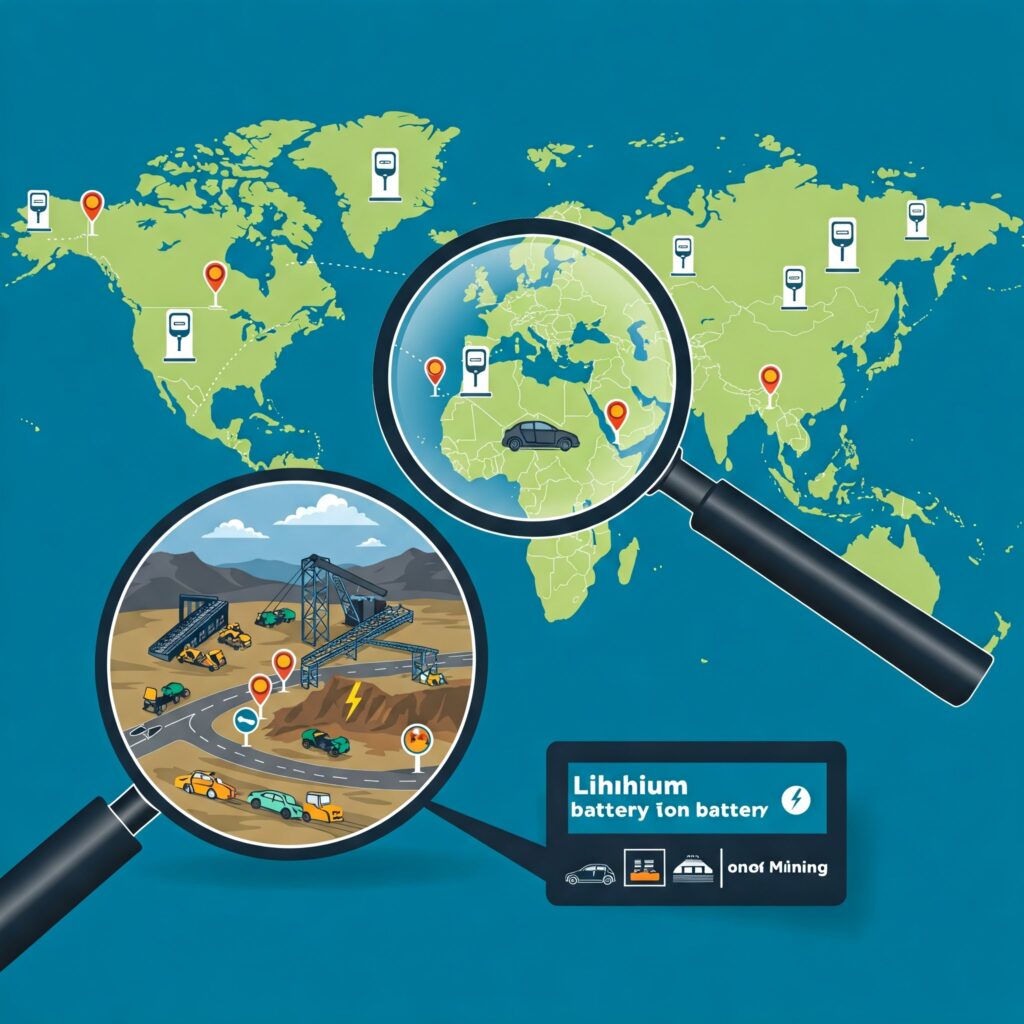
2. Cobalt Mining: The Human Rights Disaster No One Talks About
Most of the world’s cobalt (used to stabilize lithium-ion batteries) comes from the Democratic Republic of Congo (DRC), and the mining conditions there are… let’s just say, not great.
- Over 70% of the world’s cobalt comes from the DRC, with thousands of miners working in dangerous, unregulated mines.
- Reports show child labor, extreme exploitation, and life-threatening working conditions.
- Many of these miners are digging by hand with no protective equipment—just to power our “clean energy” future.
EV makers are trying to reduce cobalt dependency by switching to lithium-iron-phosphate (LFP) batteries, but for now, cobalt is still a key ingredient.
3. Nickel Mining: Poisoning Land and Water
Nickel is another crucial metal for EV batteries, but mining it is environmentally brutal:
- Nickel mining in Indonesia and the Philippines has led to widespread deforestation and pollution of rivers and coastal waters.
- In Russia, Norilsk (one of the world’s biggest nickel mining hubs) has been labeled one of the most polluted places on Earth—with locals breathing in toxic metal dust on a daily basis.
So while nickel-rich batteries give EVs longer range, they also come at a high environmental cost.
The Ugly: Who Controls the Supply Chain?
Just like oil drilling, battery mining is controlled by a few powerful players.
- China dominates lithium-ion battery production, processing over 60% of the world’s lithium and controlling 80% of the world’s battery raw material refining.
- Countries like the U.S. and Europe are scrambling to reduce dependence on foreign battery materials, but setting up new mines and refineries takes years (if not decades).
- This means that just like oil, battery materials are subject to price swings, geopolitical tension, and supply chain bottlenecks.
Remember when gas prices spiked? Get ready for lithium shortages doing the same to EV prices.
So, What’s the Solution?
If we don’t want battery mining to become the next oil crisis, we need better alternatives.
1. Battery Recycling: Mining Old Batteries Instead of the Earth
Right now, less than 5% of lithium-ion batteries are recycled. That’s insane, considering we could reuse most of the metals from old batteries instead of constantly digging up new ones.
- Companies like Redwood Materials and Li-Cycle are working on large-scale battery recycling, but we need governments to push for stricter recycling regulations.
- If we can create a closed-loop battery economy, we won’t need to keep mining new lithium forever.
2. Solid-State Batteries: The Next Big Thing?
Solid-state batteries (SSBs) could be the game-changer that makes lithium-ion batteries obsolete.
- They store more energy, charge faster, and don’t need as much lithium or cobalt.
- Toyota, Samsung, and other big players are investing billions into making them viable for mass production.
- If successful, SSBs could reduce the demand for destructive battery mining.
3. Diversify Battery Materials
Instead of relying on lithium, cobalt, and nickel, companies are exploring alternatives:
- Lithium-iron-phosphate (LFP) batteries – Cheaper and more stable, already being used by Tesla and BYD.
- Sodium-ion batteries – No lithium needed, and sodium is super abundant (aka no mining crisis).
If these alternatives take off, we could reduce the worst environmental impacts of battery production.
Final Verdict: Are We Just Replacing One Problem with Another?
Battery mining isn’t as dirty as oil drilling, but it’s far from “clean.” Right now, we’re swapping CO₂ emissions for water depletion, deforestation, and human rights issues.
The good news?
Unlike oil, batteries can be recycled and improved. If we focus on better mining practices, stronger recycling programs, and next-gen battery tech, we might actually build a clean energy future that doesn’t just create new problems.
But until then, let’s not pretend driving an EV magically makes you an environmental hero—because if that battery came from unethical cobalt mines and drained a desert dry, you’re just outsourcing the pollution.
