
We’re living in an age where machines can learn, adapt, and even think. AI models can write poetry, drive cars, predict prices, and diagnose diseases.
And yet, some of the most valuable knowledge in the world still can’t be taught to a machine. Not because it’s outdated. But because it’s too human.
The Knowledge That Lives in the Gaps
There’s a kind of knowledge that doesn’t show up in manuals, training videos, or even smart databases.
It lives in gestures, smells, gut feelings, and glances.
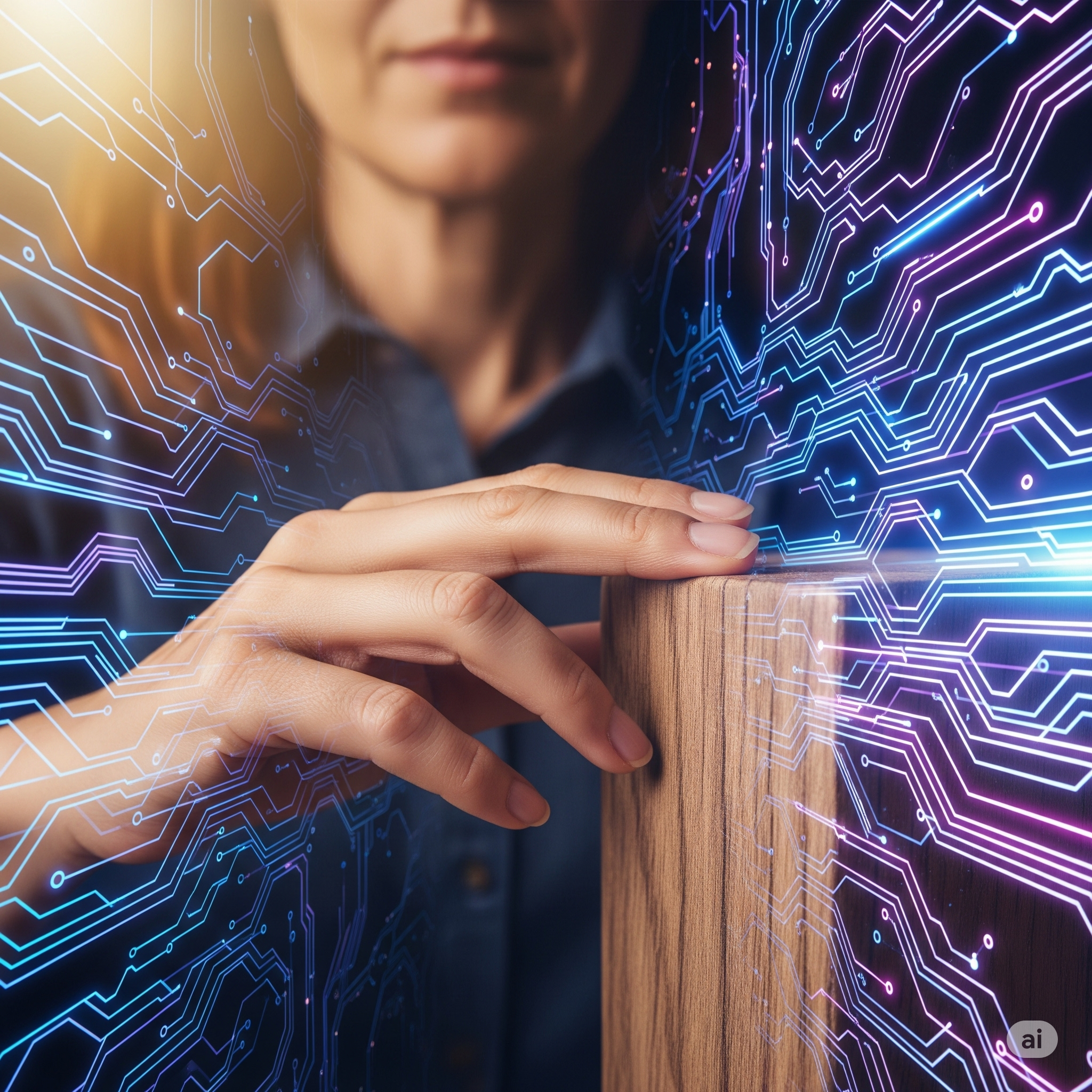
- A carpenter running his hand across a surface and saying, “Needs one more pass.”
- A grandmother adjusting the flame by instinct, not measurement, when making rotis.
- A teacher sensing the mood of the classroom and shifting their tone without thinking.
- A small-town mechanic who hears an engine for two seconds and says, “Your clutch plate’s going.”
They may never say it in words.
They may not even know how they know.
But they know.
And that kind of knowing is called tacit knowledge.
Why Machines Struggle With It
AI is brilliant at rules, patterns, and structure.
But tacit knowledge isn’t structured.
It’s passed from hand to hand, not server to server.
You can’t just give an AI 10,000 videos of a potter’s wheel and expect it to feel the clay.
You can’t feed it journal articles about negotiation and expect it to read a room during a tense deal.
Because tacit knowledge is built in the spaces between repetition and reflection.
It’s emotional. Sensory. Context-rich.
And often, the people who hold it… never wrote it down.
Why This Matters Now
As AI becomes the first line of defence in many businesses, handling queries, scanning reports, recommending actions, we risk forgetting the value of the quiet operator in the back room.
The one who doesn’t speak in buzzwords, but whose decisions quietly prevent disasters.
The one who can’t explain their method in a presentation, but has 20 years of unbroken trust.
We’re in danger of over-valuing speed and visibility, and under-valuing depth and intuition.
The Real Future of Work Is Hybrid, Not Just Human + Machine, But Explicit + Tacit
The real opportunity is to create bridges, not replacements.
- Let AI do the heavy lifting. Let humans hold the insight.
- Let machines process the signals. Let people read the silence.
- Let models learn the steps. Let masters teach the rhythm.
Because in the end, the most powerful intelligence isn’t artificial or natural.
It’s the blend of the two.
One Last Thought
If you’ve ever felt that what you know is hard to explain, don’t dismiss it.
It may be exactly the kind of knowledge that will become more rare and valuable in the future.
Tacit knowledge is the quiet inheritance of humanity.
And AI, no matter how smart, is still a student in that classroom.
