

You haven’t truly lived in Delhi if you haven’t planned your entire Sunday around one plate of Chole Bhature.
And by “one plate,” I obviously mean three.
It starts with that familiar morning feeling—not hunger, no. Guilt. The guilt of last night’s 2 a.m. momo binge whispering, “Tujhse na ho payega.”
So what do we do?
We wake up and make things worse. The Delhi way.
You call the group chat—every friend has a designated role:
- One has the car.
- One knows the legendary shops.
- One says he’s dieting. (He lies.)
- And one shows up 45 mins late and says, “Bhai I had a heavy breakfast, just taking a bite.”
That guy eats the most.
You arrive at the joint. It’s either Sitaram in Paharganj, Baba Nagpal in Lajpat, GopalJi in Rohini, Rama Chole Bhature in Ashok Nagar or some shop in purani dilli your dad swears was “there before Partition.”
The queue is half the crowd of Sarojini on a weekend.
Inside? Chaos. Beautiful, greasy chaos.
The cashier uncle has one eye on the crowd and the other on your ₹500 note. He’ll return change when your grandkids are born.
The bhature guy is an aesthetic warrior. He fluffs each bhatura with the wrist action of a tabla player and the speed of someone trying to outrun a GST raid.
You finally get your plate.
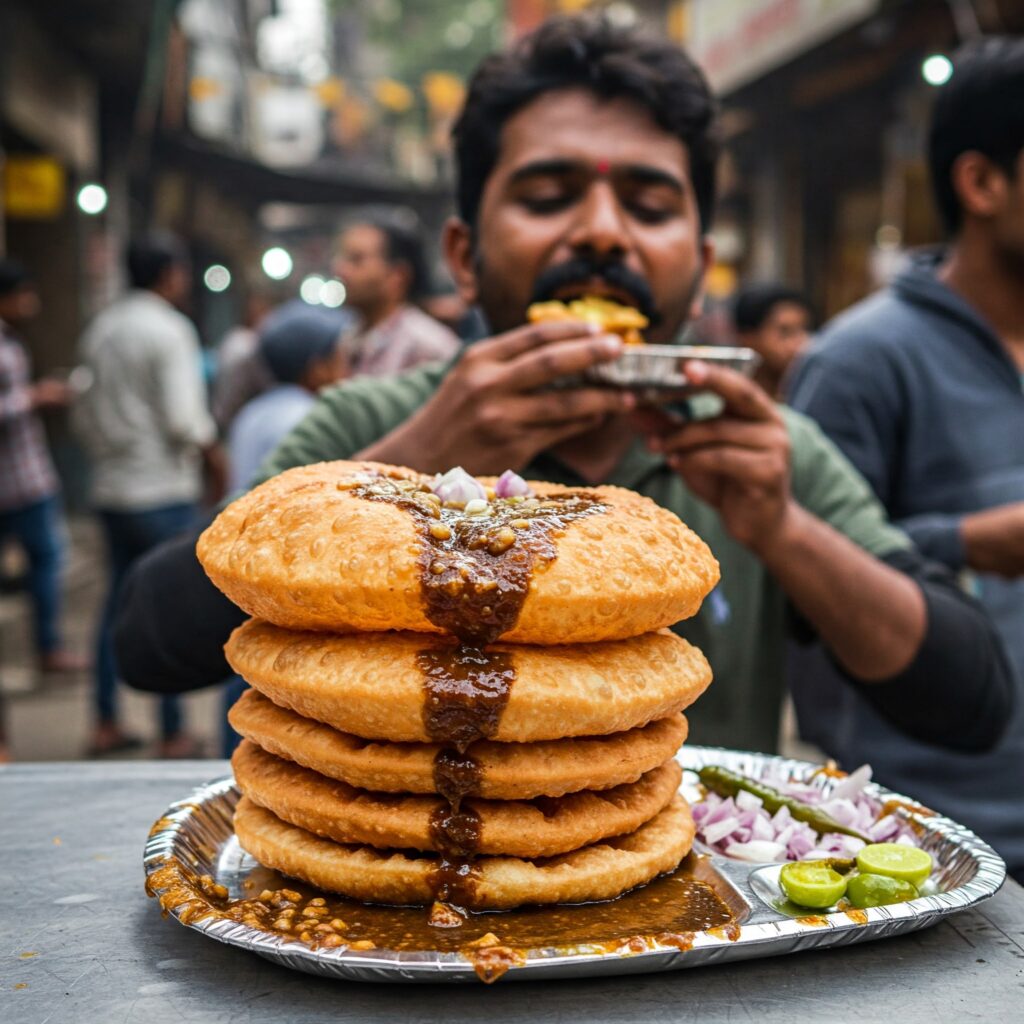
One bhatura is a balloon ready for NASA launch.
The other is floppy like Delhi’s promises to fix potholes.
The chole stare at you with the intensity of your mother during your report card days. Spicy. Heavy. Slightly toxic, but you keep going back.
That green chilli on the side? Pure Delhi.
Lethal. Unnecessary. And somehow… respected.
Someone in your group is already sweating. Another one has gone quiet because he bit into a clove pretending to be chana. That one friend who said, “Bas ek bite,” is now licking his fingers and asking for extra achar.
Then it starts: the Great Delhi Debate.
“Yeh Rajouri ke bhature better hain, bro.”
“No no, real chole toh Pitampura ke Sharma uncle ke the.”
“Yaar, yeh toh Amul butter nahi lag raha.”
“Acha sun, Agra wale bhature try kiye hain kabhi?”
Bro. Let me eat.
Also—why are we comparing breakfast like it’s cricket stats?
But we Dilliwalas are built different. We’ve turned Chole Bhature into a personality trait. We plan weddings around the caterer’s chole. We judge new relationships on bhature compatibility.
“You like thin bhature? Sorry, this isn’t working out.”
And yet—despite the oil, despite the sleep coma, despite the “mera digestion weak hai yaar” laments—we go back.
Again. And again.
Why?
Because therapy is expensive.
Gyms are scams.
And Chole Bhature?
Chole Bhature is truth.
But wait. Let’s talk about the chole.
Black.
Dark, mysterious, and simmered like it just returned from a heartbreak in Karol Bagh.
They get their color from black tea, amla, and probably Delhi pollution.
These are not your friendly neighborhood chickpeas. These chole have been through things. They’ve seen life. They’ve argued on Janpath. They’ve cried at India Gate.
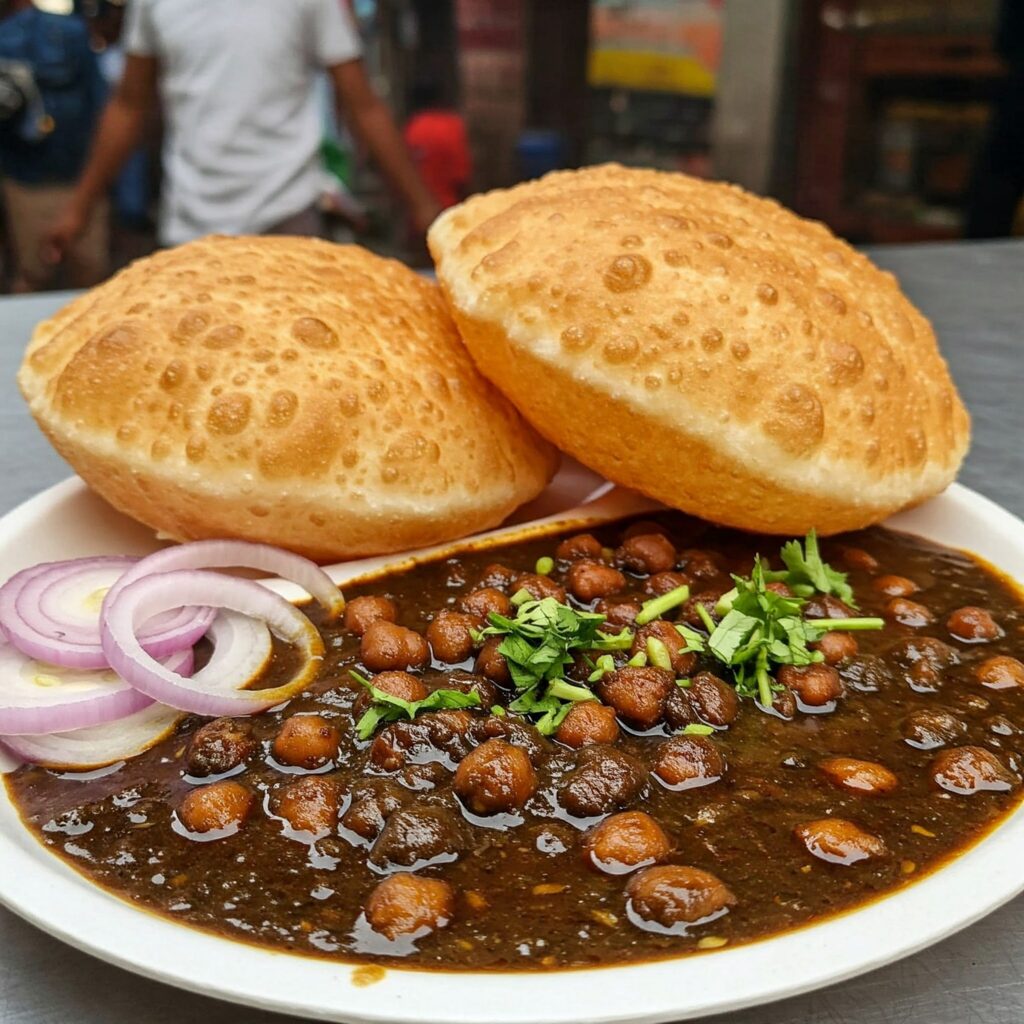
Enter the Great Chole Confusion.
Go to literally anywhere else in the country and ask for Chole Bhature, and they’ll serve you… something else.
Chickpeas in a light brown gravy, usually made with tomato, onion, and a little bit of “hope.”
And then they’ll proudly say:
“This is our chana bhatura!”
Sorry, what?
Chana Bhatura?!
It’s like calling butter chicken “red gravy with poultry.”
It’s not offensive, it’s… just wrong.
And if you’re a Delhiite, you feel it in your soul.
That brownish chana is soft, sweet and suspiciously polite.
Meanwhile, Delhi chole are bitter, deep, and ready to punch you with flavor.
I once opened a Chole Bhature outlet in Belagavi. I brought the real-deal: people from the North, black chole, fried bhature, the works.
Before taking a bite, people looked at the plate like I had served them a crime scene.
“Why is it so dark?”
“Is it burnt?”
“Is this healthy?”
“Are you sure this isn’t kadha?”
Then they tasted it.
And suddenly—enlightenment.
The suspicious looks faded.
One guy leaned in and whispered, “Yeh toh alag hi level ka hai.”
Another one just quietly ordered a second plate.
Someone started asking if we’d open on Sundays too.
That’s the thing about Delhi Chole.
They don’t care what you think.
They just show up, unapologetically intense, and before you know it—you’re converted.
Brown chana might be universal, but black chole?
They’re a commitment.
You don’t eat them casually.
You experience them.
They leave a mark. On your palate, your memory, and sometimes your T-shirt.
Disclaimer (because people be sensitive):
This is a love letter from a true Delhiite who has spent years eating, burping, and then regretting (but never learning from) Chole Bhature mornings. If you prefer oats, salad, or believe in “portion control,” this article is not for you. We respect your digestive system, but here in Dilli… we worship gluten, spice, and that one aunt in the line who always knows where the real achar is hidden.
This piece is a work of sarcasm, nostalgia, and mild indigestion. Any offence taken by lovers of brown chana is purely unintentional—unless you’re one of those people who adds sugar to rajma. In that case, we can’t be friends.
Chole Bhature from Delhi are not better.
They’re just… different.
Louder. Greasier. Angrier.
Like the city itself.
And we wouldn’t have it any other way.
No chole were harmed in the making of this article. The chana, however, is still threatening legal action.
