

Introduction: Moving Beyond Sustainable Tourism
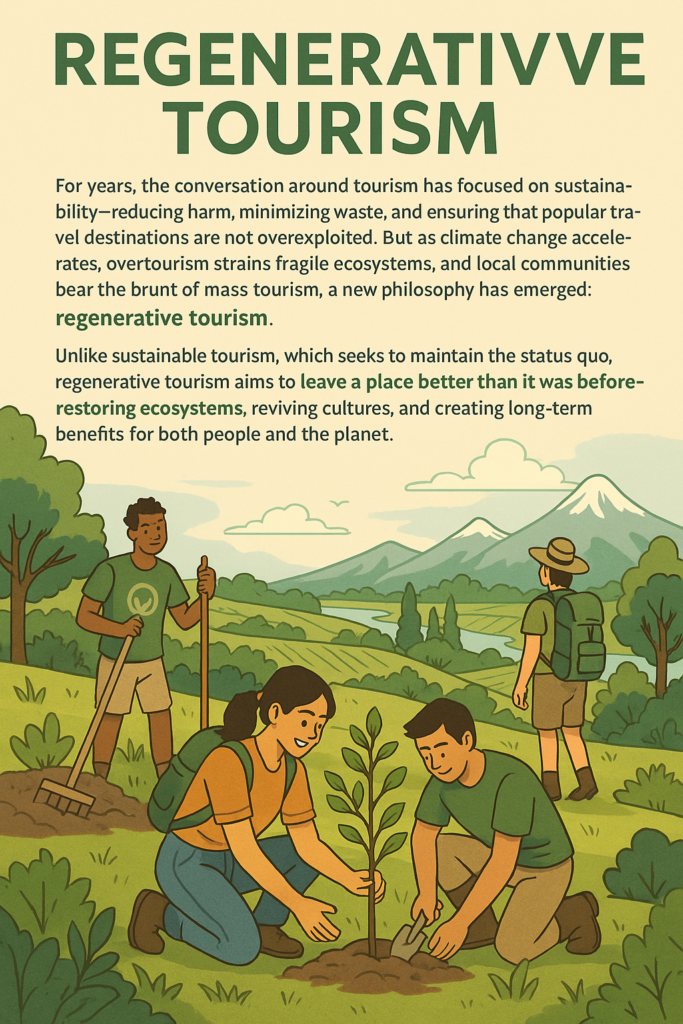
For years, the conversation around tourism has focused on sustainability—reducing harm, minimizing waste, and ensuring that popular travel destinations are not overexploited. But as climate change accelerates, overtourism strains fragile ecosystems, and local communities bear the brunt of mass tourism, a new philosophy has emerged: regenerative tourism. Unlike sustainable tourism, which seeks to maintain the status quo, regenerative tourism aims to leave a place better than it was before—restoring ecosystems, reviving cultures, and creating long-term benefits for both people and the planet.
What is Regenerative Tourism?
Regenerative tourism goes beyond minimizing damage. It actively contributes to the environment and local communities. The core principles of regenerative tourism include:
- Revitalizing Ecosystems – Restoring biodiversity and reversing damage caused by conventional tourism.
- Empowering Local Communities – Ensuring that indigenous populations, local artisans, and small-scale entrepreneurs benefit from tourism revenues.
- Cultural Preservation – Reviving dying traditions, crafts, and languages by integrating them into meaningful tourism experiences.
- Holistic Development – Encouraging slow, mindful travel that fosters a deeper connection between travelers and the places they visit.
Regenerative tourism is rooted in the idea that travel should leave a place better than it was found.
India’s Role in Regenerative Tourism
India, with its vast ecological and cultural diversity, has been both a victim of mass tourism and a beacon of regenerative travel initiatives. From the fragile ecosystems of the Himalayas to the serene backwaters of Kerala, regenerative tourism is gaining momentum. India’s spiritual ethos, which emphasizes harmony with nature and respect for all life, aligns perfectly with the principles of regenerative tourism. The country’s ancient practices, such as Ayurveda and yoga, already promote holistic well-being and environmental balance
Here’s how:
1. Restoring the Himalayas Through Conscious Travel
The Indian Himalayas, a prime trekking and adventure tourism destination, have suffered from waste accumulation, deforestation, and uncontrolled footfall. Initiatives like Waste Warriors in Uttarakhand and Sikkim’s ban on plastic bottles are steps toward regeneration. Locals are being engaged in reforestation drives, sustainable homestays, and permaculture projects that rejuvenate the land instead of exploiting it.
2. Rural Tourism in Rajasthan: Empowering Local Communities
In Rajasthan, regenerative tourism is helping sustain villages by integrating visitors into local life. Rather than just sightseeing at forts and palaces, travelers now participate in pottery-making in Molela, experience organic farming in Pali, or stay in traditional mud houses in Jodhpur. Organizations like Apani Dhani promote eco-friendly stays that provide financial stability to rural artisans while preserving traditional architecture and crafts.
3. The Revival of Vedic Agriculture in Kerala
Kerala’s backwaters, once overburdened by houseboats and unchecked tourism, are witnessing a shift toward regenerative practices. Resorts like Kumarakom Lake Resort work closely with farmers to revive Vedic agricultural techniques. Ayurvedic retreats not only promote wellness but also contribute to local biodiversity conservation by cultivating medicinal plants and preserving indigenous knowledge.
4. Indigenous Eco-tourism in the Northeast
The Seven Sister states of Northeast India are home to some of the most unique tribal cultures and biodiversity hotspots. Regenerative tourism efforts in Nagaland and Meghalaya focus on empowering indigenous communities through homestays, organic farming, and eco-sensitive trekking. The Root Bridges of Meghalaya, an ancient engineering marvel, have gained global recognition as a model for nature-integrated tourism.
In Arunachal Pradesh, the Mehao Wildlife Sanctuary and Tawang Eco-tourism Initiative promote wildlife conservation while allowing visitors to experience local tribal hospitality. Nagaland’s Hornbill Festival has transformed into an eco-conscious event where sustainable tourism meets cultural revival, with funds from tourism supporting tribal artisans, musicians, and conservation programs.
Additionally, the rise of community-managed eco-lodges and wilderness treks, such as the Dzukou Valley trek, ensures that visitor influx does not disrupt the fragile environment. The incorporation of regenerative tourism principles in these initiatives has helped protect indigenous ways of life while boosting local economies.
5. Community Initiatives in Ladakh
Ladakh, a region known for its breathtaking landscapes and Buddhist heritage, community-based tourism initiatives are empowering locals to manage tourism sustainably. Homestays run by families, organic farming practices, and efforts to preserve traditional crafts are ensuring that tourism supports both the environment and the community.
Global Examples of Regenerative Tourism
Regenerative tourism is not just an Indian phenomenon—it is a worldwide movement. Examples include:
- New Zealand’s Tiaki Promise – Encouraging visitors to act as guardians of the land by reducing their carbon footprint and participating in conservation projects.
- Costa Rica’s Reforestation Efforts – Tourists contribute to reforestation by planting trees and supporting sustainable coffee plantations.
- Bali’s Green School & Regenerative Villages – A model for integrating tourism with education, sustainability, and community development.
How Travelers Can Be Part of the Solution
Regenerative tourism requires conscious participation from travelers. Here’s how individuals can contribute:
- Choose Eco-friendly Accommodations – Opt for homestays, eco-lodges, and sustainable resorts that reinvest in local communities.
- Support Local Artisans & Farmers – Avoid mass-produced souvenirs and instead buy directly from local craftspeople and organic markets.
- Respect Indigenous Practices – Learn about and respect the traditions, rituals, and ecological practices of the places visited.
- Minimize Carbon Footprint – Travel by train or bus where possible, engage in carbon offset programs, and avoid single-use plastics.
- Participate in Conservation Programs – Volunteer in reforestation drives, wildlife protection projects, or sustainable farming initiatives.
Conclusion: A New Era of Travel
The future of tourism is no longer just about seeing new places—it’s about healing them.
As we enter this new era of conscious travel, the question we must ask ourselves is this: Will we leave the places we visit better than we found them?
The answer to that question will determine the future of tourism—and, ultimately, the health of our planet.
Regenerative tourism offers a path forward, where travel becomes a force for positive change. It’s an opportunity to reconnect with the world in a meaningful way, to give back as much as we take, and to ensure that future generations can experience the beauty and wonder of our planet.
In India, where the sacred and the natural are intertwined, this shift is not just possible—it’s inevitable. By embracing regenerative tourism, we can transform the way we travel, creating a legacy of healing and hope for the world.
Disclaimer
This article is for informational purposes only and does not serve as an endorsement of any specific travel companies or programs. Readers are encouraged to research and verify the regenerative tourism initiatives they support, ensuring they align with authentic ecological and community-based practices. Travel responsibly and with awareness.
