

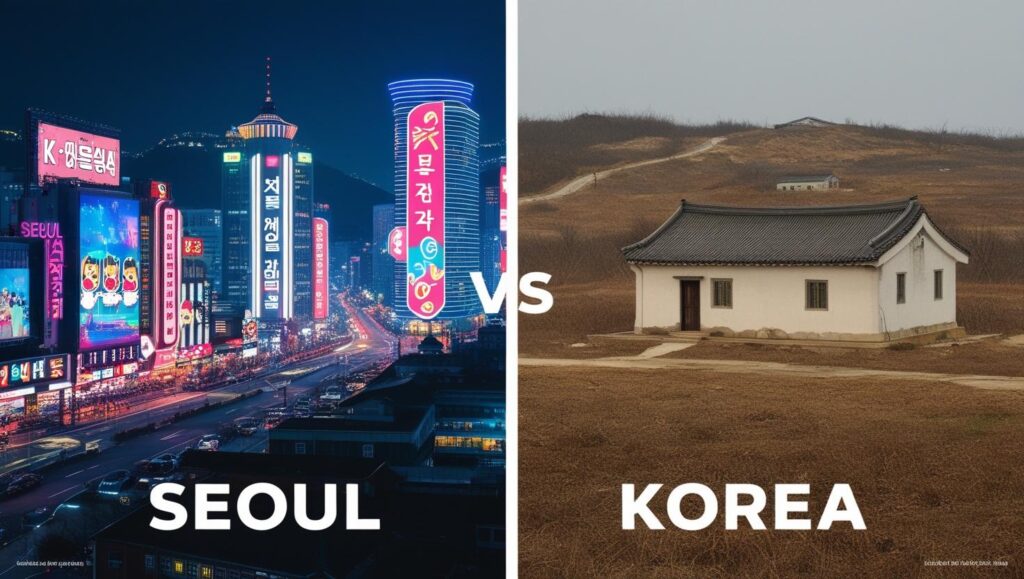
If you ever wanted to see the ultimate example of “same same, but oh-so-different,” look no further than the Korean Peninsula. South Korea and North Korea may share a border, a language, and a deep love for kimchi, but when it comes to global influence, they’re basically on opposite ends of the spectrum. One is a global trendsetter with a soft power empire; the other is… well, let’s just say, a country best known for missile tests and mystery. One exports world-famous music, beauty products, and next-gen tech; the other exports anxiety and military tension.
South Korea: The Global Superstar
If world popularity were a high school, South Korea would be the effortlessly cool kid who aces every subject, wins every talent show, and somehow has perfect skin. It rebuilt itself from the ground up after the Korean War and turned into a global powerhouse of culture, technology, and economic success.
K-Pop, K-Dramas, and K-Everything Else
South Korea has weaponized entertainment like no other country. K-Pop is no longer just music—it’s a global movement. BTS alone has an army (literally, that’s what their fans are called), and BLACKPINK makes the world go ddu-du ddu-du with every comeback. K-Dramas have people across the planet swooning, crying, and questioning their own romantic standards because, let’s be honest, no one is ever going to stare at you longingly in the rain like that.
Beyond music and dramas, South Korea’s cultural exports include webtoons, variety shows, esports, and even language-learning apps dedicated to Hangeul. Korean entertainment isn’t just popular—it’s a full-blown industry designed to keep you hooked.
Tech That Makes the Rest of Us Look Like Cavemen
South Korea didn’t just embrace the future—it built it. Samsung is basically running the smartphone industry, LG is making sure your fridge is smarter than you, and the country’s internet speeds make the rest of us wonder if we’re still on dial-up. South Koreans experience such fast Wi-Fi that buffering feels like a myth.
Public transport? Sleek, modern, and absurdly punctual. Even their toilets are futuristic, giving you options you didn’t even know you needed. Meanwhile, other countries are still figuring out how to get basic free Wi-Fi in public spaces.
Food That Wins Hearts (and Occasionally Burns Mouths)
Korean food is now a global sensation. People who once couldn’t pronounce “bibimbap” are now debating the best side dishes to go with it. Korean BBQ has turned eating into an interactive experience, and let’s not forget about ramyeon, which has saved countless souls from hunger at 3 AM.
Kimchi? It’s not just food—it’s a national treasure, a probiotic-packed marvel that’s been around for centuries. Spicy, fermented, and unapologetically bold, just like South Korea itself.
Soft Power Flexing
From Parasite winning an Oscar to Squid Game making people reconsider playing childhood games ever again, South Korea has mastered the art of cultural dominance. And let’s not forget skincare—K-beauty has people across the world putting on snail mucus and thanking South Korea for it.
Meanwhile, Korean companies are buying up Hollywood talent agencies, esports tournaments are setting global records, and Korean fashion is making waves from Seoul to Paris. If soft power were an Olympic sport, South Korea would be taking home gold every single time.
North Korea: The Mysterious Hermit
Meanwhile, North Korea is like that one student who refuses to talk to anyone, has a very strict dress code, and occasionally threatens the entire class with detention. Its global presence is, well, complicated. The country exists in near-total isolation, with an economy heavily controlled by the government and a population that has little access to the outside world.
Branding: Fear and Mystery
While South Korea is associated with catchy music and high-tech gadgets, North Korea is mostly known for secretive leadership, military parades, and very, very serious news anchors. The country’s brand identity is basically “Do Not Enter”—which, funnily enough, is also its official tourism policy for most people.
North Korean media is a fascinating, if unsettling, experience—full of grand, dramatic speeches and, of course, the ever-present imagery of missile tests. Where South Korea produces globally viral content for entertainment, North Korea goes viral for, well…other reasons.
Influence Through… Intimidation?
North Korea doesn’t do global influence the way South Korea does. Instead of selling catchy music and delicious food, it keeps the world on edge with missile tests and cryptic political statements. While South Korea wins hearts, North Korea keeps security analysts very, very busy.
Diplomacy? Let’s just say North Korea prefers a “hard power” approach, where it engages in tense negotiations, surprise political moves, and state-controlled media that tells a very specific narrative.
Technology (Or Lack Thereof)
While South Koreans are debating which 5G phone to buy, North Koreans are just happy if their radios pick up the right station. The internet? That’s reserved for a select few, and let’s just say it’s not exactly blazing fast. The country runs on an intranet system called “Kwangmyong,” which is more like a limited library than the open World Wide Web.
Meanwhile, South Korea is testing 6G, and tech companies there are inventing AI robots that can cook, clean, and probably judge your life choices.
Food: Mystery Meals
North Korean cuisine is much less talked about, mainly because the country keeps its dining experiences under wraps. What little is known suggests that while traditional Korean dishes exist, access to food itself can be a major issue.
Meanwhile, their South Korean neighbors are over there debating whether cheese belongs on tteokbokki (it does), and lining up for the latest viral street food trend.
The Verdict: A Popularity Contest with a Clear Winner
If South Korea and North Korea were competing in a global popularity contest, the results wouldn’t even be close. South Korea has built an empire of soft power, technology, and cultural exports, making it one of the most beloved countries in the world. North Korea, on the other hand, remains shrouded in mystery and caution, mostly making headlines for all the wrong reasons.
South Korea is the bright, dynamic country that has captured the world’s imagination. North Korea? It remains a heavily guarded, secretive enigma.
One country sells dreams through dramas and pop stars. The other keeps people up at night for entirely different reasons. The contrast couldn’t be starker, but one thing’s for sure—when people say “Korea” in a conversation, they’re probably talking about the one with BTS, not the one with ballistic missiles.
Disclaimer: This article is meant to be a lighthearted, humorous take on the stark differences between South Korea and North Korea. While it highlights cultural contrasts with playful exaggeration and comedic flair, it is not intended to downplay serious geopolitical issues or the challenges faced by the people of either nation. If you’re a die-hard K-Pop fan, a dedicated K-Drama binge-watcher, or just someone who really loves kimchi, please know that this is all in good fun. Likewise, if you’re a political analyst or someone who takes international relations very seriously, maybe take a deep breath (or two). No ballistic missiles were harmed in the making of this article, and if your fridge starts giving you life advice, that’s between you and Samsung. 😆
