

Part 4 of the “Rethinking Poultry Demand” series
Part 1: The Poultry Industry’s Biggest Competitor Isn’t Another Chicken Producer
Part 2: Beyond Chicken Consumption: Six Metrics Every Poultry Company Should Track
Part 3: What Really Drives Chicken Demand? A Consumer Behaviour Framework
For decades, the poultry industry has been built around operational excellence.
- Better genetics
- Better feed conversion
- Lower mortality
- Higher processing efficiency
These capabilities transformed poultry into one of the world’s most efficient sources of animal protein.
But efficiency alone doesn’t create demand.
Consumers do…
As markets mature, competitive advantage shifts from producing better to understanding consumers better.
Perhaps the next evolution of the poultry industry isn’t becoming better producers.
It’s becoming better students of consumer behaviour.
The Industry Doesn’t Sell Birds
This may sound obvious, but it’s worth repeating.
–> Consumers don’t buy live birds
–> They don’t buy feed conversion ratios
–> They don’t buy hatchability percentages
–> They buy meals
–> Convenience
–> Taste
–> Affordability
–> Nutrition
–> Confidence
The closer a company moves to understanding those decisions, the better it can shape demand rather than simply respond to it.
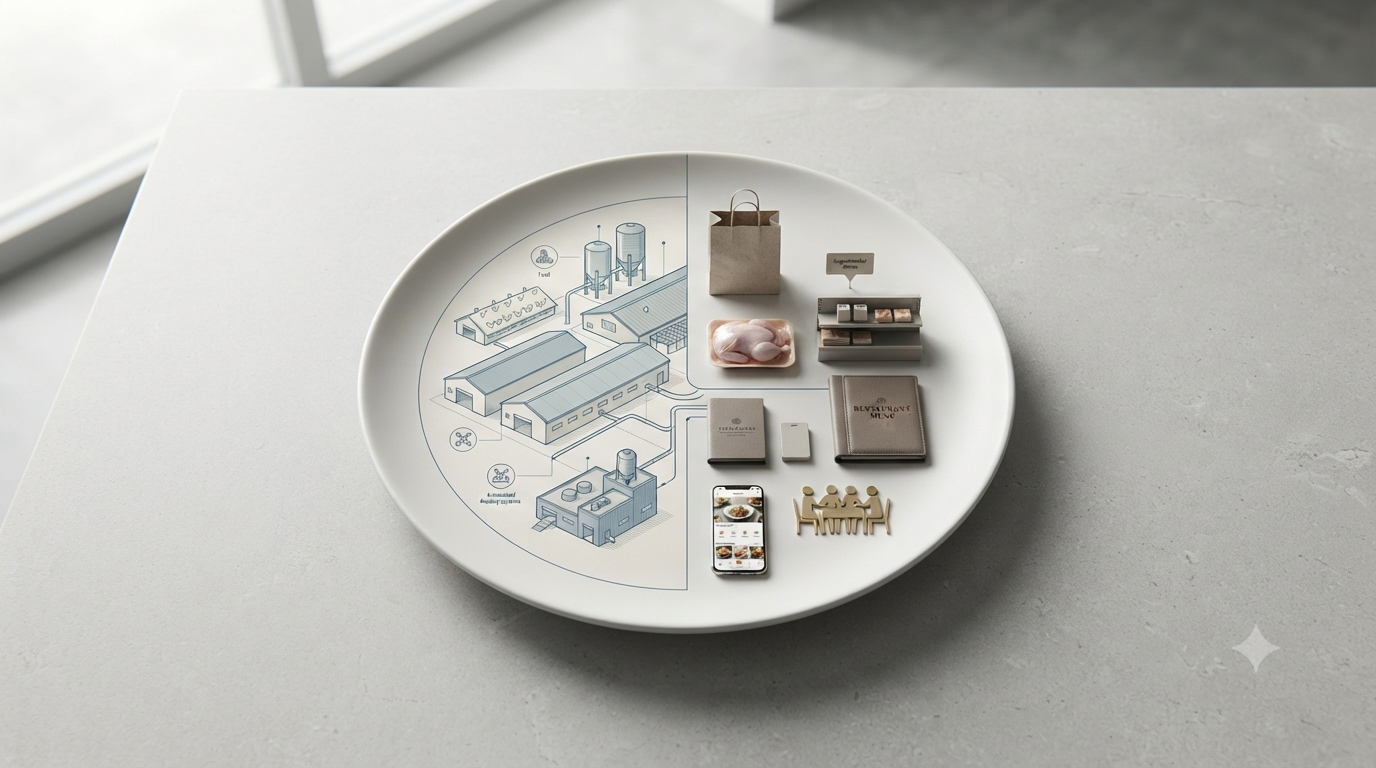
Every Plate Is a Consumer Decision
When a family sits down for dinner, they rarely ask,
“Which poultry company produced this chicken?”
Instead, they ask different questions.
- Is it affordable?
- Is it healthy?
- Is it easy to prepare?
- Will everyone enjoy it?
- Can I order it quickly?
These are consumer goods questions.
Yet they determine the future demand for poultry.
From Commodity Thinking to Category Thinking
Commodity industries often compete on cost.
Consumer goods companies compete on value.
The difference is profound.
One asks,
“How can we produce chicken more efficiently?”
The other asks,
“How can we make consumers choose chicken more often?”
–> The first improves supply
–> The second expands demand
Long-term industry growth requires both.
Lessons from Consumer Goods
The world’s leading consumer goods companies invest heavily in understanding why people buy.
They study habits.
Shopping behaviour.
Household demographics.
Packaging preferences.
Consumption occasions.
Brand perception.
Retail visibility.
They know that every purchase begins long before a consumer reaches the checkout counter.
The poultry industry has an opportunity to apply the same mindset.
Not by copying consumer goods companies —> but by learning from how they understand consumers.
Winning Beyond the Farm Gate
The next wave of competitive advantage may not come from a better feed formulation alone.
It may come from creating new meal occasions.
Designing products for changing family structures.
Making chicken easier to cook.
Reducing preparation time.
Improving convenience without compromising quality.
Helping restaurants serve chicken in more appealing ways.
Success will increasingly be determined beyond the farm gate.
Data Should Flow Both Ways
Today’s poultry supply chains are remarkably good at collecting production data.
- Feed intake
- Growth rates
- Mortality
- Processing yields
Imagine applying the same discipline to consumer data.
- Why did households choose chicken this week?
- Which products are gaining popularity?
- Which age groups are increasing consumption?
- Which occasions remain under-served?
Operational intelligence explains how we produce.
Consumer intelligence explains why consumers buy.
–> The future demands both
The Next Competitive Advantage
The poultry companies that lead the next decade may not simply be those with the largest farms or the most efficient processing plants.
They may be the ones that understand consumers better than anyone else.
Because in the end, consumers don’t reward efficiency.
They reward value.
And value is created not only inside farms and factories, but also inside kitchens, restaurants, supermarkets, and the everyday decisions made around the dinner table.
The poultry industry has spent decades mastering production.
Perhaps the next decade belongs to those who master the consumer.
Disclaimer
This article does not suggest that poultry companies should become consumer goods companies or abandon their operational strengths. Instead, it argues that the industry can complement its world-class production capabilities by adopting selected consumer-centric practices that have long been used in consumer goods businesses. Operational excellence and consumer understanding are complementary—> not competing—> capabilities.
